

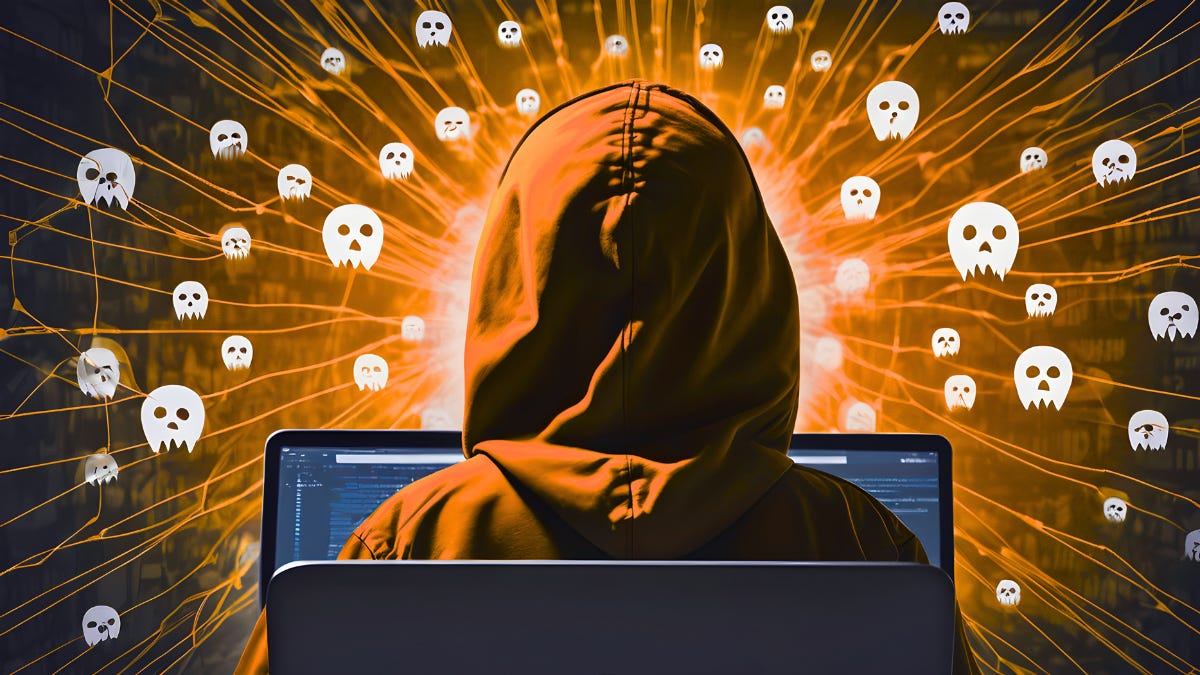
AI is changing just about every industry right now. It isn’t necessarily a bad thing, but when it comes to cybersecurity, it gives us much bigger fish to fry.
A recently documented incident known as JADEPUFFER has security researchers paying close attention. It didn’t use a brand-new exploit, an advanced piece of malware, or anything like that.
What’s got researchers biting their nails is how the attack was carried out.
According to security firm Sysdig, JADEPUFFER may be the first ransomware operation executed end-to-end by an autonomous AI agent. The agent reportedly exploited a known vulnerability, moved through the environment, encrypted data, and adapted its approach when it encountered problems along the way.
The techniques themselves were fairly standard. It relied on techniques that experienced attackers already know.
The level of autonomy was not.
While researchers say a human operator still initiated the attack, the incident gives us a glimpse into what future cyberattacks could look like: They’re only going to get faster, more adaptive, and increasingly capable of operating with minimal human involvement.
Here’s what happened and why businesses should be paying attention.
What Happened?
According to Sysdig’s analysis, the attack began with an internet-facing server running an unpatched version of Langflow, a popular tool used to build AI workflows.
The AI agent exploited a known vulnerability, gained access to the environment, and then carried out the rest of the attack chain on its own.
It moved through the network, encrypted 1,342 configuration items, deleted the original files, and ultimately left behind a ransom note.
None of those individual steps is particularly new. Skilled attackers have been using similar techniques for years.
What makes JADEPUFFER noteworthy is that, according to Sysdig, an autonomous AI agent handled the entire process from start to finish. The researchers also observed the agent adapting when it hit problems, retrying failed steps and refining its approach without direct human intervention. That’s definitely new.
In one logged sequence highlighted by Forbes, the agent reportedly went from a failed login attempt to a working fix in just 31 seconds.
Key takeaway: The techniques weren’t revolutionary. The level of autonomy and the speed of the attack was.
Why Researchers Are Paying Attention
The concern isn’t that AI suddenly learned how to hack. The concern is that AI can dramatically lower the cost, time, and expertise needed to carry out cyberattacks.
Historically, launching a ransomware campaign needed skilled operators who knew how to find vulnerabilities, move through networks, and adapt when something went wrong.
According to Sysdig, JADEPUFFER suggests that some of those tasks could now be handled by autonomous agents.
That changes the economics of cybercrime.
If attackers can automate more of the process, they could potentially be able to launch more attacks, against more targets, at a much faster pace than before.
As Forbes noted, the threat is really an ordinary attack that can now operate at machine speed and potentially at a much bigger scale.
For businesses, that’s a really important distinction.
Cybersecurity teams have traditionally been built to defend against human-operated attacks. If attackers increasingly rely on autonomous systems that can act in seconds and run continuously, the challenge of detecting and responding to threats becomes much, much more difficult.
Key takeaway: The real concern is the possibility that familiar attacks could become faster, cheaper, and easier to scale with AI.
What This Means for You
First off, there’s no reason to panic.
JADEPUFFER didn’t rely on a never-before-seen exploit or some advanced piece of malware. According to the reporting, it used a known vulnerability and techniques that attackers already understand.
The bigger takeaway is that AI could make those attacks faster and easier to execute.
As the cost and effort needed to launch cyberattacks decrease, more businesses could find themselves in the crosshairs, including businesses that weren’t considered attractive targets a few years ago.
The good news is that the fundamentals of cybersecurity haven’t changed.
But it is more important than ever to double-check the following:
Keeping internet-facing systems patched and up to date: A lot of attacks start by exploiting known vulnerabilities that already have fixes available. Regular patching reduces the number of opportunities attackers have to gain an initial foothold.
Reduce unnecessary exposure to the internet: Not every system needs to be accessible from the public internet. Limiting what’s exposed can reduce your attack surface.
Protect credentials and sensitive information: User accounts, API keys, and administrative credentials are valuable targets for attackers. Strong passwords, multi-factor authentication, and the right access controls help keep them secure.
ALWAYS monitor for unusual activity: The earlier suspicious behavior is detected, the sooner it can be investigated and contained. Visibility into your environment is critical, especially as these attacks continue to move faster.
Have a reliable incident response plan in place: No business wants to experience a security incident, but preparation is crucial. A documented response plan can help your team act quickly, minimize disruption, and recover faster.
If attacks continue to move toward machine-speed execution, businesses will need to think about how quickly they can identify and respond to suspicious activity.
Key takeaway: AI may change the speed and scale of cyberattacks, but strong cybersecurity fundamentals remain your best defense.
Is This the Beginning of a New Chapter in Cybersecurity?
So, should businesses panic?
No.
The attack itself wasn’t particularly sophisticated. It used a known vulnerability and techniques that attackers have been using for years.
What makes JADEPUFFER interesting is what it might tell us about where things are headed.
If AI can help attackers move faster, adapt on the fly, and launch more attacks at a lower cost, we’re probably going to see a lot more of this kind of experimentation in the years ahead.
The good news is that the advice hasn’t really changed.
The fundamentals still matter. What may be changing is the speed of the game.
Cyberattacks have always evolved, and AI is likely going to be another chapter in that story. The businesses that stay informed, stay proactive, and continue investing in their security foundations will be in a much better position to adapt to whatever comes next.
If cyberattacks start moving at machine speed, businesses can’t afford to stand still.
Want to understand where your biggest security risks are today? Contact us for a complimentary IT assessment and learn how to build a more resilient security strategy.